Within UAP debates
How AI Changes Alien Intelligence Stories
Modern science fiction increasingly imagines alien civilisations through advanced intelligence, surveillance and technological inequality.
On this page
- From spacecraft to artificial minds
- Technology gaps in alien fiction
- Links to real AI debates
Page outline Jump by section
Introduction
Artificial intelligence has changed the way science fiction imagines alien intelligence. Instead of assuming that the most advanced extraterrestrials are simply older, smarter versions of humans, many modern stories explore the possibility that the highest forms of intelligence may be artificial, distributed, or impossible for biological minds to understand. This shift connects alien fiction with real debates about machine intelligence, technological inequality and the possibility that advanced civilisations could eventually move beyond biology.[SETI Meetings]meetings.seti.orgMeetings The Search for Extraterrestrial Life and Post-Biological IntelligenceSETI MeetingsThe Search for Extraterrestrial Life and Post-Biological Intelligence…

Within the wider relationship between UFO ideas and science fiction, AI introduces a new version of the “advanced alien” question. The mystery is no longer only how aliens travel across space or what their spacecraft might look like. It becomes a question of what intelligence itself might become. Stories increasingly ask whether an alien civilisation would still have bodies, emotions and social structures similar to ours, or whether it would consist of artificial minds operating at scales humans cannot easily interpret.[SETI Meetings]meetings.seti.orgMeetings The Search for Extraterrestrial Life and Post-Biological IntelligenceSETI MeetingsThe Search for Extraterrestrial Life and Post-Biological Intelligence…
From spacecraft to artificial minds
Classic alien stories often presented technological superiority through visible inventions: faster spacecraft, powerful weapons or hidden devices. AI-focused science fiction changes the emphasis from what aliens build to what aliens are. An advanced civilisation may not be defined by its machines because its machines may have become the civilisation itself.
This idea appears in discussions around “post-biological” intelligence: the possibility that a sufficiently advanced society could transition from biological evolution to artificial systems. Some researchers in SETI (the Search for Extraterrestrial Intelligence) have argued that if technological civilisations survive for very long periods, artificial intelligence may become a more likely form of advanced intelligence than organic life. The reasoning is that machines can potentially operate in environments, timescales and physical forms unavailable to biological organisms.[SETI Meetings]meetings.seti.orgMeetings The Search for Extraterrestrial Life and Post-Biological IntelligenceSETI MeetingsThe Search for Extraterrestrial Life and Post-Biological Intelligence…
Science fiction has explored this possibility through alien civilisations that are not simply biological species with better technology. In Iain M. Banks’s Culture novels, for example, artificial intelligences known as “Minds” manage much of a highly advanced galactic civilisation. The stories use these entities to examine questions about governance, freedom and whether extremely powerful artificial beings could create more humane societies rather than simply dominate weaker ones.[ScienceDirect]sciencedirect.comArtificial intelligences and political organization: An exploration based on the science fiction work of Iain M. Banks - Sci…
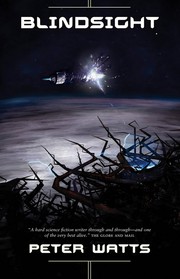
Other works take a more unsettling approach. Peter Watts’s novel Blindsight presents alien intelligence as something that may not match human assumptions about consciousness or self-awareness. Its first-contact scenario challenges the idea that intelligence must involve human-like thought, emotions or identity. The story reflects a growing trend in science fiction: aliens are becoming less like strange animals and more like fundamentally different forms of cognition.[WIRED]wired.comBlindsight Is the Epitome of Science Fiction HorrorBlindsight, his 2006 novel, is widely regarded as a cornerstone of science fiction horror. The book follows a crew of augmented humans se…
Technology gaps create new alien myths
The alien as a civilisation ahead of us
AI changes alien stories because it provides a mechanism for extreme technological inequality. If another civilisation is thousands or millions of years older than humanity, it may not simply have better computers; it may have intelligence systems that represent an entirely different stage of evolution.
This idea connects with real scientific discussions about extraterrestrial intelligence. The search for alien civilisations traditionally focuses on detecting technological activity, such as signals or engineering projects. However, researchers have increasingly considered whether advanced intelligence could leave different kinds of evidence, including signatures produced by highly advanced artificial systems.[SETI Institute]seti.orgInstitute HomeSETI InstituteHome…
Science fiction uses this gap to explore humanity’s vulnerability. An AI-based alien civilisation might not invade because it wants territory or resources. It might simply view humans in the same way humans view less technologically developed species: as interesting, but limited. This creates a different kind of first-contact story where the central conflict is not military power but understanding.
The film Arrival illustrates a related shift. Its alien visitors are not primarily frightening because of their technology; the challenge is that their way of communicating and thinking is radically different. The story focuses on the difficulty of interpreting an intelligence that does not share human assumptions.[WIRED]wired.comarrival science fact fictionThe science of Arrival: what the film got right (and wrong) | WIREDNovember 12, 2016…
Surveillance, prediction and the fear of being studied
AI has also changed alien narratives by making surveillance a central theme. Modern societies are increasingly familiar with systems that analyse behaviour, predict outcomes and process enormous amounts of information. Science fiction extends this idea into extraterrestrial encounters: advanced aliens may not arrive as conquerors but as observers collecting data.
This creates a link between UFO narratives and AI concerns. Many modern stories imagine aliens as entities capable of monitoring humanity from a distance, understanding our behaviour through superior computation and waiting until we reach a particular technological threshold. The fascination comes from the possibility that contact would not be a meeting between equals but an encounter between a developing civilisation and one that has already transformed intelligence itself.
Links to real AI debates
The rise of AI in alien fiction reflects real uncertainty about what intelligence means. Current artificial intelligence systems do not possess confirmed consciousness or human-like understanding, but debates about future AI often involve questions that science fiction has explored for decades: whether machines could become autonomous, how humans would control powerful systems, and whether intelligence can exist in forms unlike our own.[Springer]link.springer.comWhat can science fiction tell us about the future of artificial intelligence policy? | AI & SOCIETY | Springer Nature LinkSeptemb…
One important influence is the debate over artificial general intelligence (AGI), a hypothetical form of AI capable of performing a broad range of intellectual tasks. Science fiction often jumps directly to highly advanced machine minds, while current AI systems remain specialised and imperfect. Researchers studying AI narratives have noted that fictional portrayals frequently focus on human-level or superhuman intelligence, even though real-world AI development often involves narrower systems with specific abilities.[Springer]link.springer.comWhat can science fiction tell us about the future of artificial intelligence policy? | AI & SOCIETY | Springer Nature LinkSeptemb…
These differences matter because alien AI stories are not predictions in a simple sense. They are thought experiments. A story about an artificial alien civilisation can explore issues already present in human technology: who controls powerful systems, whether intelligence creates responsibility, and how societies respond when they encounter something they cannot fully understand.
Why AI aliens have become a defining modern idea
Artificial intelligence gives alien science fiction a new way to explore the oldest question in the genre: what happens when humanity encounters something truly different? Earlier stories often imagined aliens as biological outsiders. AI-focused stories suggest that the greatest difference may not be physical appearance but a completely unfamiliar form of intelligence.
This makes AI aliens especially relevant to modern UAP and science-fiction debates. The cultural image of the unknown visitor has shifted from the simple flying saucer pilot towards more complex possibilities: artificial minds, machine civilisations and intelligences whose goals may not resemble human desires. Scientific searches for extraterrestrial intelligence continue without confirmed detection of alien technology, but science fiction provides a space for examining what kinds of intelligence humanity might one day encounter.[SETI Institute]seti.orgInstitute HomeSETI InstituteHome…
The result is a change in the meaning of “alien”. In contemporary science fiction, the most alien intelligence may not come from another planet in a biological form. It may come from a civilisation that has transformed itself so completely that humanity struggles to recognise it as life, culture or mind at all.
Amazon book picks
Further Reading
Books and field guides related to How AI Changes Alien Intelligence Stories. Use these as the next step if you want deeper reading beyond the article.
The Three-Body Problem
The inspiration for the Netflix series 3 Body Problem! WINNER OF THE HUGO AWARD FOR BEST NOVEL Over 1 million copies sold in North Americ...
Blindsight
Rating: 4.1/5 from 67 Google Books ratings
Blindsight is a hard science fiction novel by Canadian writer Peter Watts, published by Tor Books in 2006. It won the Seiun Award for bes...
Children of Time
Humanity is overrated. The tenth anniversary edition of Adrian Tchaikovsky’s critically acclaimed Children of Time – an epic story of hum...
Life 3.0: Being Human in the Age of Artificial Intelligence
'This is the most important conversation of our time, and Tegmark's thought-provoking book will help you join it' Stephen Hawking THE INT...
eBay marketplace picks
Marketplace Samples
Live-tested eBay searches with available results related to this page.
Selected fromalien robot model oneBay.co.uk.



Endnotes
1.
Source: meetings.seti.org
Title: Meetings The Search for [Extraterrestrial Life]({{ ‘extraterrestrial-life/’ | relative_url }}) and Post-Biological Intelligence
Link:https://meetings.seti.org/
Source snippet
SETI MeetingsThe Search for Extraterrestrial Life and Post-Biological Intelligence...
2.
Source: sciencedirect.com
Link:https://www.sciencedirect.com/science/article/abs/pii/S0160791X11000728
Source snippet
Artificial intelligences and political organization: An exploration based on the science fiction work of Iain M. Banks - Sci...
3.
Source: wired.com
Title: Blindsight Is the Epitome of Science Fiction Horror
Link:https://www.wired.com/2023/10/geeks-guide-peter-watts
Source snippet
Blindsight, his 2006 novel, is widely regarded as a cornerstone of science fiction horror. The book follows a crew of augmented humans se...
4.
Source: seti.org
Title: Institute Home
Link:https://www.seti.org/
Source snippet
SETI InstituteHome...
5.
Source: wired.com
Title: arrival science fact fiction
Link:https://www.wired.com/story/arrival-science-fact-fiction/
Source snippet
The science of Arrival: what the film got right (and wrong) | WIREDNovember 12, 2016...
Published: November 12, 2016
6.
Source: link.springer.com
Link:https://link.springer.com/article/10.1007/s00146-021-01273-2
Source snippet
What can science fiction tell us about the future of artificial intelligence policy? | AI & SOCIETY | Springer Nature LinkSeptemb...
7.
Source: seti.org
Link:https://www.seti.org/?pid=1241
Source snippet
Image How are we searching for life in the universe? Image What will we do if we detect a signal? Image How do we...
8.
Source: seti.org
Title: Protocols for an ETI Signal Detection
Link:https://www.seti.org/research/seti-101/protocols-for-an-eti-signal-detection/
9.
Source: link.springer.com
Link:https://link.springer.com/article/10.1007/s00146-026-03089-4
10.
Source: seti.org
Title: SET I Institute Postdoctoral Fellowships
Link:https://www.seti.org/research/postdoctoral-fellowships/
11.
Source: link.springer.com
Link:https://link.springer.com/article/10.1007/s00146-024-02087-8
12.
Source: link.springer.com
Link:https://link.springer.com/article/10.1007/s12369-022-00876-z
13.
Source: space.com
Link:https://www.space.com/extraterrestrial-intelligence-artificial-biological
14.
Source: link.springer.com
Link:https://link.springer.com/article/10.1007/s00146-021-01299-6
15.
Source: space.com
Title: ‘Arrival’, AI and Alien Math: Q&A with Stephen Wolfram | Space
Link:https://www.space.com/34783-stephen-wolfram-arrival-interview.html
16.
Source: wired.com
Title: iain m banks interview
Link:https://www.wired.com/story/iain-m-banks-interview/
17.
Source: seti.org
Link:https://www.seti.org/research/
18.
Source: sciencedirect.com
Title: The postbiological universe
Link:https://www.sciencedirect.com/science/article/pii/S009457650800043X
19.
Source: youtube.com
Title: AI Aliens
Link:https://www.youtube.com/watch?v=HX6gj7RbjCE
Source snippet
Yuval Noah Harari: AI and the future of humanity | Frontiers Forum Live 2023...
20.
Source: us.macmillan.com
Link:https://us.macmillan.com/books/9781250237484/blindsight/
21.
Source: books.google.com
Link:https://books.google.com/books/about/Blindsight.html?id=sX1GmAEACAAJ
22.
Source: us.macmillan.com
Link:https://us.macmillan.com/books/9781429955195/blindsight/
23.
Source: hachettebookgroup.com
Link:https://www.hachettebookgroup.com/series/iain-m-banks/culture/
24.
Source: openlibrary.org
Link:https://openlibrary.org/books/OL59132985M/Blindsight
25.
Source: openlibrary.org
Link:https://openlibrary.org/books/OL42072682M/Blindsight
26.
Source: openlibrary.org
Link:https://openlibrary.org/books/OL37362568M/Blindsight
Additional References
27.
Source: cambridge.org
Link:https://www.cambridge.org/core/journals/international-journal-of-astrobiology/article/abs/cultural-evolution-the-postbiological-universe-and-seti/D8FB8F56B12DD52A25ECC40F46E0984A
Source snippet
Cambridge University PressCultural evolution, the postbiological universe and SETI | International Journal of Astrobiology | Cambridge Core...
28.
Source: youtube.com
Link:https://www.youtube.com/watch?v=azwt2pxn3UI
Source snippet
UAPs Are Not Accidents. A Futurist Explains The Real Reason They're Here Now...
29.
Source: youtube.com
Title: UAPs Are Not Accidents. A Futurist Explains The Real Reason They’re Here Now
Link:https://www.youtube.com/watch?v=xOod0w1e81w
Source snippet
Hello, Computer - Seth Shostak - A.I. and the search for aliens...
30.
Source: sf-encyclopedia.com
Title: SF E: Arrival
Link:https://sf-encyclopedia.com/entry/arrival
Source snippet
Tagged: Film. [Input] [Input] [Input] Film (2016). Paramount Pictures presents a 21 Laps Entertainment, FilmNation Entertainment and Lava...
31.
Source: stafforini.com
Link:https://stafforini.com/works/dick-2003-cultural-evolution-postbiological/
32.
Source: scientificamerican.com
Link:https://www.scientificamerican.com/article/daniel-h-wilson-on-finding-a-native-take-on-traditional-alien-invasion/
33.
Source: scienceopen.com
Link:https://www.scienceopen.com/hosted-document?doi=10.14293%2FPR2199.003782.v1
34.
Source: en-academic.com
Link:https://en-academic.com/dic.nsf/enwiki/251110/
35.
Source: theguardian.com
Link:https://www.theguardian.com/books/booksblog/2016/nov/11/ted-chiang-science-fiction-genius-arrival-writer
36.
Source: era.ed.ac.uk
Link:https://era.ed.ac.uk/handle/1842/43565