Within The cultural impact
How UFO Shapes Changed Space Age Design
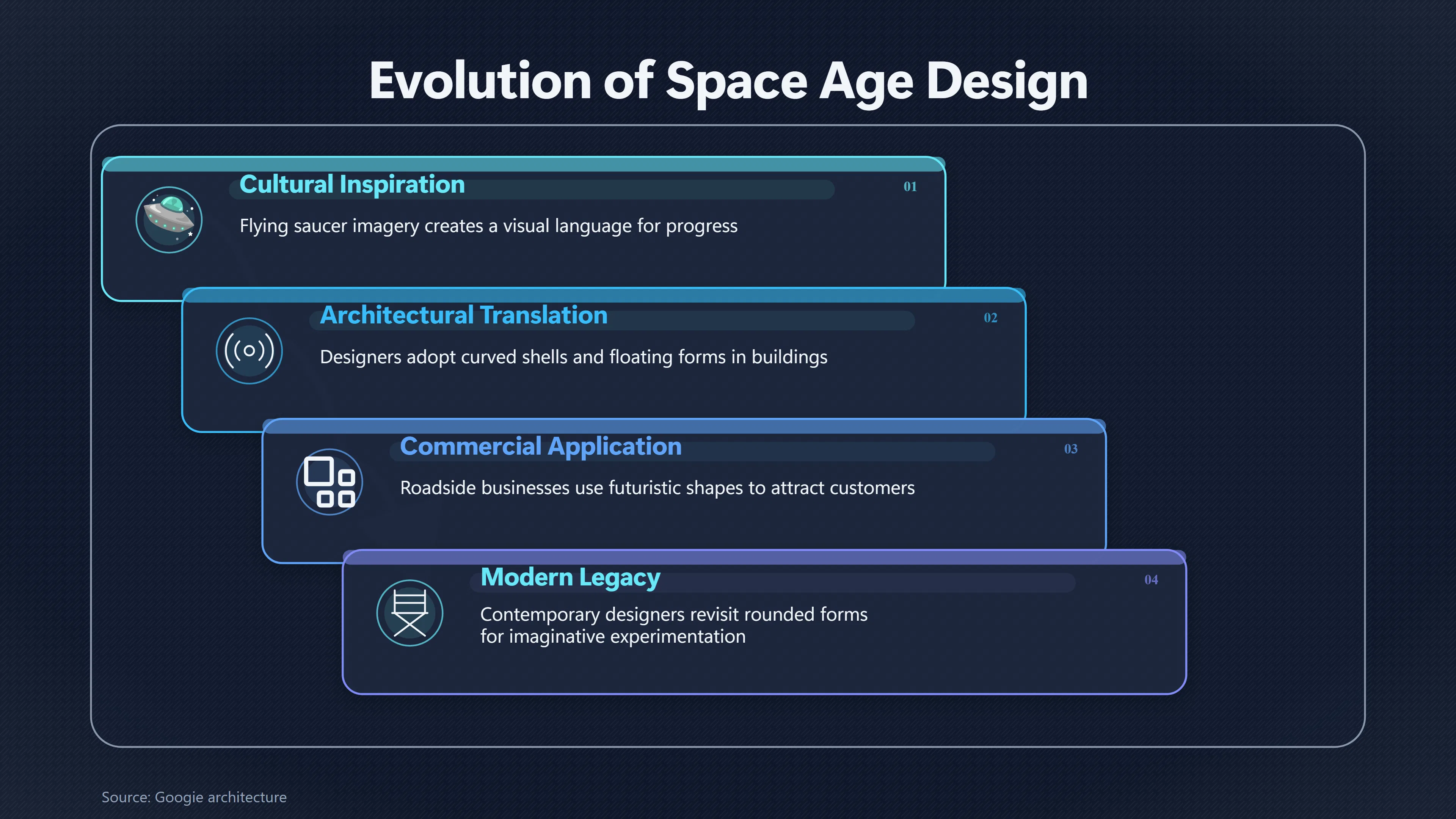
Flying saucer shapes influenced architecture, design and consumer culture during the optimistic Space Age period.
On this page
- Saucer forms in futuristic architecture
- Technology optimism and visual style
- Legacy in modern design culture
Page outline Jump by section
Introduction
Flying saucer imagery did more than shape science fiction stories: it helped create a visual language for the Space Age itself. During the 1950s and 1960s, designers borrowed the smooth curves, hovering forms and futuristic associations of imagined spacecraft to create buildings, interiors and consumer products that suggested a technologically advanced tomorrow. These designs did not claim that alien craft were real; instead, they transformed the flying saucer into a symbol of speed, progress and possibility.[Wikipedia]WikipediaGoogie architectureGoogie architecture
The result was a distinctive Space Age style in which architecture and everyday objects appeared ready for a future of space travel and automation. From Southern California’s Googie buildings to the sculptural optimism of airport terminals and furniture design, flying saucer forms became a way for designers to express confidence in innovation and a rapidly changing world.[Architectural Digest]architecturaldigest.comArchitectural Digest5 of the Best Googie Buildings in L.ANamed after a now-demolished coffee shop in West Hollywood, Googie style thrived during the '50s and '60s when America's fascination with…
Saucer forms in futuristic architecture
The strongest architectural influence of the flying saucer appeared in Googie architecture, a style that developed in post-war Southern California. Designed for a car-based society moving quickly along highways, Googie buildings used dramatic shapes intended to catch attention from a distance: exaggerated rooflines, sharp angles, neon signs, boomerangs and circular forms associated with spacecraft. Flying saucer imagery became one of several visual shortcuts for communicating “the future” to customers passing by.[Wikipedia]WikipediaGoogie architectureGoogie architecture
Coffee shops, petrol stations and roadside businesses became important showcases for this futuristic language. Their designs were not simply decorative; they reflected the belief that technology would reshape ordinary life. A building that looked like it had arrived from another planet suggested that the business inside belonged to a modern, efficient and exciting age. In this sense, the flying saucer became a commercial symbol of progress rather than only an object from science fiction.[Wikipedia]WikipediaGoogie architectureGoogie architecture
When buildings began to look like spacecraft
Although many Space Age buildings borrowed from the same cultural atmosphere as UFO imagery, not every futuristic structure was a direct copy of a saucer. Architects often translated the idea of flight into curved shells, floating forms and unusual silhouettes. The former TWA Flight Center at New York’s John F. Kennedy International Airport, designed by Eero Saarinen and opened in 1962, is a key example. Saarinen aimed to capture the excitement and “spirit of flight” through sweeping concrete forms and an interior that made passengers feel as though they were entering a machine designed for the future.[CIA]cia.govEero Saarinen: A Place in Architectural HistoryEero Saarinen: A Place in Architectural History - CIADecember 21, 2017…
The TWA terminal shows an important difference between science-fiction imagery and real architecture. Its shape was not a literal flying saucer, but its organic curves, dramatic spaces and futuristic atmosphere belonged to the same cultural world that produced UFO-inspired design. It represented confidence in aviation, technology and global connection at a time when space exploration was becoming a defining symbol of modern life.[University of Chicago Press]press.uchicago.eduOpen source on uchicago.edu.

Technology optimism and visual style
The popularity of saucer-like forms reflected a broader Space Age belief that new technology could improve everyday experience. After the Second World War, rockets, satellites, nuclear energy and aviation created a sense that the future would be radically different from the past. Designers responded by replacing traditional rectangular forms with curves, domes and streamlined shapes that appeared more advanced and dynamic.[Wikipedia]WikipediaGoogie architectureGoogie architecture
Flying saucer imagery worked especially well because the shape itself communicated unfamiliar technology. A disc-shaped object had no obvious connection to existing vehicles such as cars or trains, making it ideal for representing something beyond ordinary human engineering. In consumer culture, the saucer became a visual promise: products, buildings and environments could appear as if they belonged to a future civilisation.[Wikipedia]WikipediaGoogie architectureGoogie architecture
This influence appeared across interiors and industrial design as well. Designers experimented with plastics, moulded materials and rounded forms that suggested movement and flexibility. Furniture, lighting and household objects increasingly adopted sculptural shapes that matched the optimistic mood of the era. The aim was not only to make objects look futuristic but also to make modern life feel connected to technological progress.[Wallpaper*]wallpaper.comMeeting at the Cranbrook Academy in 1940, they fused Charles' architectural background and Ray's abstract art roots to push the boundarie…
Legacy in modern design culture
The flying saucer’s influence declined as the optimism of the early Space Age gave way to more sceptical views of technology, but its visual language remained influential. Many Googie buildings were later demolished because their bold roadside style fell out of fashion, yet preservation efforts and renewed interest in mid-century design have restored appreciation for their futuristic ambition.[Wikipedia]WikipediaGoogie architectureGoogie architecture
Today, Space Age design is often revisited because it represents a particular historical moment when the future seemed open-ended. Contemporary designers continue to use rounded forms, reflective surfaces and spacecraft-inspired aesthetics, not because they expect yesterday’s visions of tomorrow to become reality, but because those forms still communicate imagination and experimentation.[Good Housekeeping]goodhousekeeping.comIt's heavily influenced by the Space Age and Atomic Era, featuring bright colors, neon lights, and dynamic shapes like boomerangs and fly…
The lasting importance of flying saucer-inspired design is therefore cultural rather than technological. The saucer became a bridge between science fiction and everyday life: a fictional spacecraft shape that influenced real buildings, products and public spaces. It allowed designers to turn ideas about unknown worlds and future possibilities into physical environments people could enter, use and experience.[Wikipedia]WikipediaGoogie architectureGoogie architecture
Amazon book picks
Further Reading
Books and field guides related to How UFO Shapes Changed Space Age Design. Use these as the next step if you want deeper reading beyond the article.
Googie Redux: Ultramodern Roadside Architecture
The book that helped spark the retro craze for fifties architecture and introduced the term googie to the world is back! First published...

Populuxe
Surveys the diversity of products that flooded the consumer markets in the decade from 1954 to 1964 and occassioned the formation of a ma...
Where's My Space Age?
Sean Topham goes back to the future to follow the evolution of space-age design: from its conception in the 1950s to its decline in the 1...
A History of the Future
This multi-faceted survey of utopian ideas, presented with clarity and humor, will appeal to a broad general readership.
eBay marketplace picks
Marketplace Samples
Live-tested eBay searches with available results related to this page.
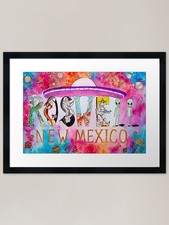
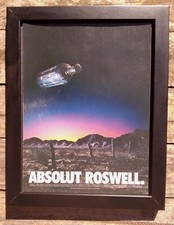
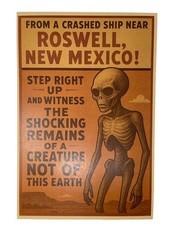
Selected fromRoswell UFO poster oneBay.co.uk.
Endnotes
1.
Source: Wikipedia
Title: Googie architecture
Link:https://en.wikipedia.org/wiki/Googie_architecture
2.
Source: cia.gov
Title: Eero Saarinen: A Place in Architectural History
Link:https://www.cia.gov/stories/story/eero-saarinen-a-place-in-architectural-history/
Source snippet
Eero Saarinen: A Place in Architectural History - CIADecember 21, 2017...
Published: December 21, 2017
3.
Source: Wikipedia
Title: TWA Flight Center
Link:https://en.wikipedia.org/wiki/TWA_Flight_Center
4.
Source: wallpaper.com
Link:https://www.wallpaper.com/design-interiors/charles-ray-eames-furniture-design-definitive-guide
Source snippet
Meeting at the Cranbrook Academy in 1940, they fused Charles' architectural background and Ray's abstract art roots to push the boundarie...
5.
Source: design.tel
Title: twa terminal interior
Link:https://design.tel/twa-terminal-interior/
6.
Source: architecturaldigest.com
Title: Architectural Digest5 of the Best Googie Buildings in L.A
Link:https://www.architecturaldigest.com/gallery/googie-buildings-la
Source snippet
Named after a now-demolished coffee shop in West Hollywood, Googie style thrived during the '50s and '60s when America's fascination with...
7.
Source: press.uchicago.edu
Link:https://press.uchicago.edu/ucp/books/book/distributed/D/bo22381671.html
8.
Source: goodhousekeeping.com
Link:https://www.goodhousekeeping.com/home/decorating-ideas/a69632777/googie-most-searched-architecture-style-google/
Source snippet
It's heavily influenced by the Space Age and Atomic Era, featuring bright colors, neon lights, and dynamic shapes like boomerangs and fly...
Additional References
9.
Source: livingetc.com
Link:https://www.livingetc.com/features/verner-panton-most-iconic-designs
Source snippet
Known for defying the restrained norms of Scandinavian modernism, Panton pioneered bold, futuristic aesthetics using new materials like p...
10.
Source: finnishdesignshop.com
Link:https://www.finnishdesignshop.com/en/design-stories/architecture/twa-hotel-new-york-eero-saarinen
Source snippet
Finnish Design ShopEero Saarinen’s iconic design transformed: TWA Hotel breathes new life into a decommissioned airport terminal | Design...
11.
Source: youtube.com
Link:https://www.youtube.com/watch?v=tFUTeiED9KM
Source snippet
Googie: The Architecture of the Space Age | STUFF YOU SHOULD KNOW...
12.
Source: youtube.com
Title: Googie: The Architecture of the Space Age | STUFF YOU SHOULD KNOW
Link:https://www.youtube.com/watch?v=iYKmpNSkVHM
Source snippet
Googie: When Architecture Dreamed of the Future...
13.
Source: wired.com
Link:https://www.wired.com/gallery/fascinating-images-reveal-the-genesis-of-the-twa-flight-center-americas-greatest-terminal/
14.
Source: nps.gov
Title: The Space Age in Construction (U.S. National Park Service)
Link:https://www.nps.gov/articles/000/the-space-age-in-construction.htm
15.
Source: studiomatrx.org
Title: TW A Flight Center Architecture: Saarinen’s Winged Terminal | Studio Matrx
Link:https://www.studiomatrx.org/architecture-canon/twa-flight-center
16.
Source: itsalight.co.uk
Title: 1960s sputnik lampshade with moulded white plastic base and red metal top
Link:https://www.itsalight.co.uk/products/1960s-sputnik-lampshade-with-moulded-white-plastic-base-and-red-metal-top
17.
Source: taylorfrancis.com
Title: Structuring Googie: How early 20th century developments in structural
Link:https://www.taylorfrancis.com/chapters/oa-edit/10.1201/9781003658641-178/structuring-googie-early-20th-century-developments-structural-forms-materials-helped-shape-unique-subset-us-mid-century-modern-architecture-oakley
18.
Source: homecrux.com
Title: Flying Saucer Coffee Table Beckons the ’70s Maximalist Nostalgia
Link:https://www.homecrux.com/flying-saucer-coffee-table-duffy-london/196160/