Within The cultural impact
When UFOs Reflected Cold War Fears
Cold War science fiction used UFOs to explore fears about weapons, conflict and unknown threats from beyond Earth.
On this page
- Alien threats in early cinema
- Technology anxiety and invasion stories
- Science fiction as social commentary
Page outline Jump by section
Introduction
Cold War UFO films turned alien visitors into symbols of invasion, infiltration and technological uncertainty. Rather than simply imagining creatures from another planet, many 1950s science fiction films used flying saucers and extraterrestrial threats to explore fears already present on Earth: nuclear war, military escalation, ideological conflict and the possibility of a hidden enemy. These stories appeared during a period when the atomic bomb, the Soviet–American rivalry and rapid advances in aerospace technology made the idea of an unknown power arriving from the sky feel culturally plausible.[OUP Academic]academic.oup.comOUP AcademicScience Fiction Films in the 1950s | Science Fiction Cinema: Between Fantasy and Reality | Edinburgh Scholarship Online | Oxf…
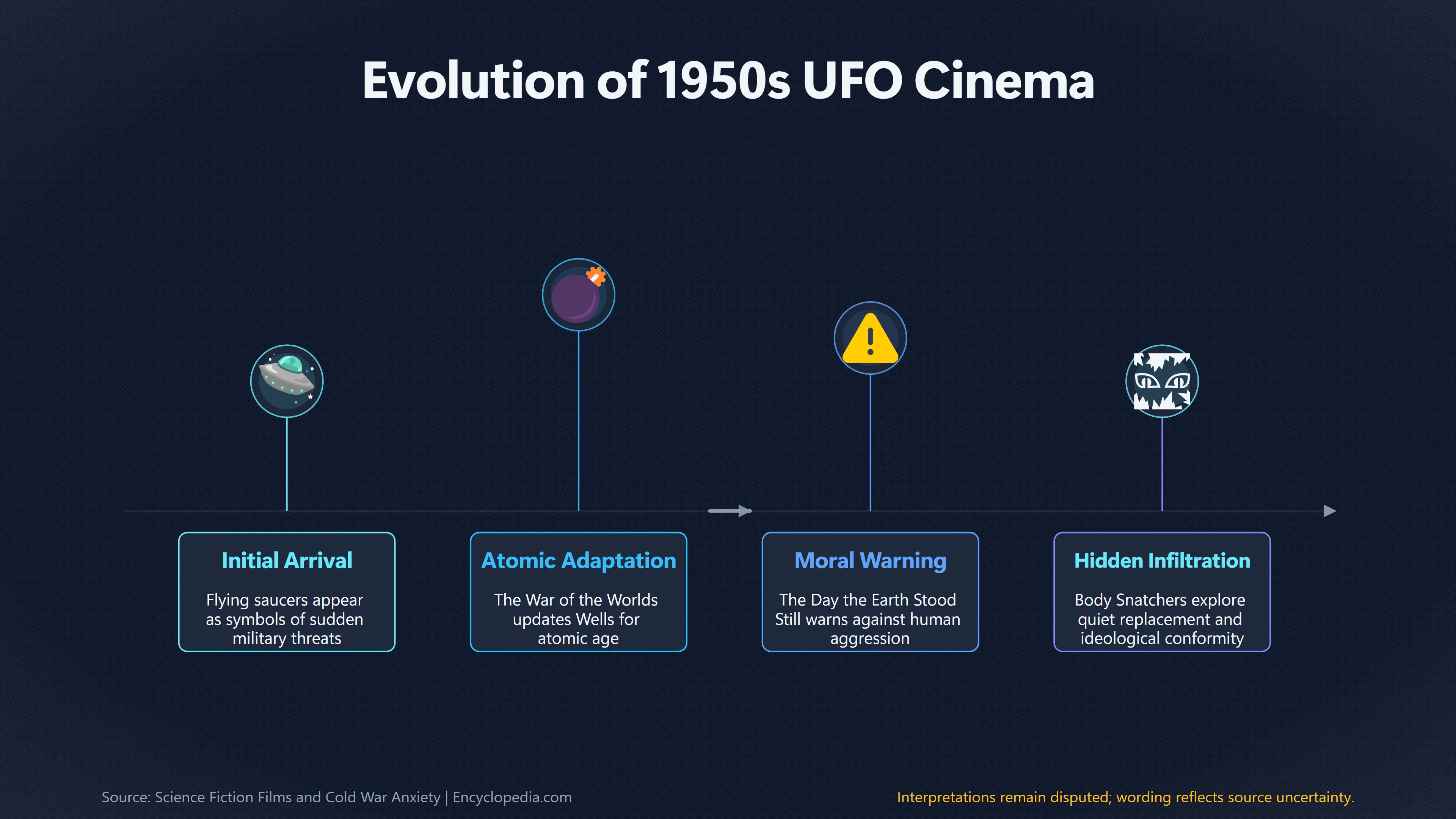
The most influential films of the era did not all present aliens in the same way. Some depicted direct military invasion, while others transformed alien contact into a metaphor for infiltration or the danger of human aggression. Films such as The War of the Worlds (1953), The Day the Earth Stood Still (1951) and Invasion of the Body Snatchers (1956) show how UFO imagery became a flexible science fiction language for expressing Cold War fears.[criterion.com]criterion.com29942 the war of the worldsThe Criterion CollectionThe War of the Worlds (1953) | The Criterion CollectionJuly 22, 2020…
Alien threats in early cinema
From flying saucers to imagined invasions
The 1950s saw a rapid growth in alien invasion stories because the UFO offered filmmakers a powerful image of an unfamiliar force arriving without warning. A spacecraft descending from the sky could represent a future military threat, a rival civilisation with superior technology or a reminder that humanity was vulnerable despite its own weapons. Science fiction cinema used the alien arrival as a way to dramatise fears about sudden attack and the limits of national defence.[Encyclopedia.com]encyclopedia.comScience Fiction Films and Cold War Anxiety | Encyclopedia.comScience Fiction Films and Cold War Anxiety | Encyclopedia.com
The War of the Worlds (1953) became one of the clearest examples of this approach. Directed by Byron Haskin and produced by George Pal, the film updated H. G. Wells’s nineteenth-century invasion story for the atomic age. The Martian machines appear as an overwhelming force that defeats conventional military responses, creating an atmosphere similar to fears of a technologically superior enemy during the Cold War. The Criterion Collection describes the film as a Cold War-era adaptation shaped by “the wonder and terror of the atomic age”, highlighting how its alien invasion reflected contemporary anxieties about destructive power.[The Criterion Collection]criterion.com29942 the war of the worldsThe Criterion CollectionThe War of the Worlds (1953) | The Criterion CollectionJuly 22, 2020…
The importance of the film was not only its story but its imagery. The glowing alien craft hovering above cities created a visual language that linked UFOs with military danger. The flying saucer was no longer simply an unusual object in the sky; it became a symbol of an unstoppable force that could cross borders and bypass traditional forms of protection.[The Criterion Collection]criterion.com29942 the war of the worldsThe Criterion CollectionThe War of the Worlds (1953) | The Criterion CollectionJuly 22, 2020…
The alien as a warning rather than only an enemy
Not every Cold War UFO film imagined aliens as straightforward attackers. The Day the Earth Stood Still (1951) reversed the invasion formula by presenting an extraterrestrial visitor who warns humanity about its own destructive behaviour. The film begins with a UFO landing in Washington, D.C., but the danger comes less from the visitor than from humanity’s growing ability to destroy itself through advanced weapons.[The Library of Congress]loc.govThe Library of Congress The day the earth stood still | Library of CongressThe Library of CongressThe day the earth stood still | Library of CongressJanuary 1, 2002…
This made the film unusual within the invasion cycle. The alien presence represented an outside observer judging human conflict, particularly the dangers created by nuclear competition. Instead of asking whether Earth could defeat an alien army, the film asked whether humans could control their own technology before it became a threat to the planet.[The Guardian]theguardian.comThe Guardian The Day The Earth Stood Still | Film | The GuardianThe Guardian The Day The Earth Stood Still | Film | The Guardian
Technology anxiety and invasion stories
Nuclear power changed the meaning of the UFO
Cold War science fiction often connected alien technology with fears about human technology. The same scientific progress that promised space exploration also produced nuclear weapons, missiles and new forms of military competition. UFO films reflected this contradiction by showing advanced machines that could inspire wonder while also creating fear.[Encyclopedia.com]encyclopedia.comScience Fiction Films and Cold War Anxiety | Encyclopedia.comScience Fiction Films and Cold War Anxiety | Encyclopedia.com
The alien craft in these films were frequently more advanced than anything humans could build. Their speed, weapons and ability to ignore existing defences made them symbols of technological imbalance. This reflected a real-world concern of the early Cold War: that a rival power might develop a weapon or capability that changed the balance of global security.
The era’s films also often focused on scientists and military officials struggling to understand unfamiliar technology. This reflected public uncertainty about whether scientific advancement could protect society or create new dangers. The result was a recurring science fiction question: would future technology save humanity, or would it expose humanity to greater risks?
Invasion could happen quietly as well as violently
While films like The War of the Worlds showed open attack, other stories explored a more hidden form of invasion. Invasion of the Body Snatchers (1956) replaced military conquest with gradual replacement. In the film, alien organisms create emotionless duplicates of human beings, allowing an entire community to be transformed without a traditional battle.[BFI]bfi.org.uk10 great american sci fi films 1950s10 great American sci-fi films of the 1950s | BFI…
The film’s power came from its suggestion that invasion did not always need armies or explosions. A society could be changed from within, creating fears connected to Cold War concerns about infiltration, conformity and ideological influence. Scholars and critics have often linked the film’s themes to the atmosphere of McCarthy-era suspicion, although interpretations have also included broader anxieties about identity and social change.[Encyclopedia.com]encyclopedia.comScience Fiction Films and Cold War Anxiety | Encyclopedia.comScience Fiction Films and Cold War Anxiety | Encyclopedia.com
This approach expanded the meaning of the UFO symbol. An alien spacecraft no longer represented only a physical threat arriving from outer space. It could also represent uncertainty about who could be trusted, how societies changed and whether invisible forces could reshape everyday life.
Science fiction as social commentary
Alien stories reflected fears about real-world conflict
Cold War UFO films worked because they allowed filmmakers to discuss dangerous subjects indirectly. Direct criticism of military policy, nuclear strategy or political tensions could be controversial, but science fiction created distance by moving conflicts into imaginary worlds. Alien invasions became fictional scenarios through which audiences could examine real fears.[Encyclopedia.com]encyclopedia.comScience Fiction Films and Cold War Anxiety | Encyclopedia.comScience Fiction Films and Cold War Anxiety | Encyclopedia.com
The genre also reflected different interpretations of the Cold War itself. Some films emphasised the need for unity against an external threat, while others questioned whether human conflict was the greater danger. The alien could be an enemy, a judge, a warning sign or a reflection of humanity’s own behaviour.
This ambiguity helped UFO imagery remain powerful. A flying saucer could represent fear of attack, but it could also represent the possibility of communication with something beyond human experience. The same symbol could express anxiety about the future while encouraging audiences to think about humanity’s place in a larger universe.

Why these films remained culturally influential
The invasion fears explored in Cold War UFO films shaped later science fiction. Modern alien stories still borrow from the visual and narrative patterns established in the 1950s: mysterious arrivals, technologically superior visitors, governments struggling to respond and societies questioning whether the threat comes from outside or from within.
The lasting importance of these films is not that they predicted alien conflict. Their significance lies in how effectively they transformed contemporary fears into science fiction. By placing invasion in outer space, filmmakers created a way to examine the pressures of the nuclear age, the uncertainty of technological progress and the fragile nature of security during the Cold War.[Encyclopedia.com]encyclopedia.comScience Fiction Films and Cold War Anxiety | Encyclopedia.comScience Fiction Films and Cold War Anxiety | Encyclopedia.com
Amazon book picks
Further Reading
Books and field guides related to When UFOs Reflected Cold War Fears. Use these as the next step if you want deeper reading beyond the article.
Keep Watching the Skies! American Science Fiction Movies of t...
Bill Warren's Keep Watching the Skies! was originally published in two volumes, in 1982 and 1986. It was then greatly expanded in what we...
Seeing Is Believing: How Hollywood Taught Us to Stop Worrying...
First published 1983. Subjects: History, Motion pictures, Moving-pictures, Political aspects of Motion pictures, Political aspects of Mov...
Screening Space: The American Science Fiction Film
This text attempts to shape definitions of the American science fiction film, studying the connection between the films and social precon...
War of the Worlds: From Wells to Spielberg
Earth invaded by Mars! Millions incinerated by heat ray! Panic grips nation as Martian tripods advance on Washington! Remember the headli...
eBay marketplace picks
Marketplace Samples
Live-tested eBay searches with available results related to this page.
Selected from1950s UFO poster oneBay.co.uk.
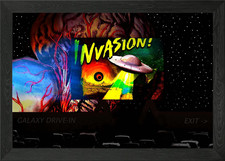
Current eBay listing
1950s UFO Hysteria Framed Wall Art Poster Canvas Print Picture
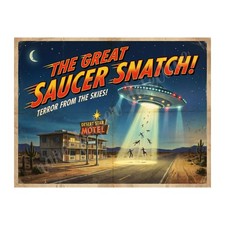
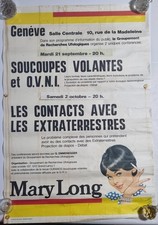
Current eBay listing
Rare 1950’s UFO Flying Saucers Lecture Poster Geneva Switzerland
Endnotes
1.
Source: academic.oup.com
Link:https://academic.oup.com/edinburgh-scholarship-online/book/15894/chapter/170796780
Source snippet
OUP AcademicScience Fiction Films in the 1950s | Science Fiction Cinema: Between Fantasy and Reality | Edinburgh Scholarship Online | Oxf...
2.
Source: encyclopedia.com
Title: Science Fiction Films and Cold War Anxiety | Encyclopedia.com
Link:https://www.encyclopedia.com/arts/culture-magazines/science-fiction-films-and-cold-war-anxiety
3.
Source: criterion.com
Title: 29942 the war of the worlds
Link:https://www.criterion.com/films/29942-the-war-of-the-worlds
Source snippet
The Criterion CollectionThe War of the Worlds (1953) | The Criterion CollectionJuly 22, 2020...
Published: July 22, 2020
4.
Source: criterion.com
Title: The War of the Worlds: Sky on Fire | Current | The Criterion Collection
Link:https://www.criterion.com/current/posts/7007-the-war-of-the-worlds-sky-on-fire%3Fsrsltid%3DAfmBOopAa2jNf-GAvj22UXctzx1YQ7SmaoVTq-GfLXOPedU5zhQ3WzjB
5.
Source: academic.oup.com
Title: reference article
Link:https://academic.oup.com/reference/62339/reference-article-abstract/554201922
6.
Source: academic.oup.com
Link:https://academic.oup.com/mississippi-scholarship-online/book/21323/chapter-abstract/181036108
7.
Source: academic.oup.com
Link:https://academic.oup.com/edinburgh-scholarship-online/book/15894/chapter-abstract/170796780
8.
Source: academic.oup.com
Link:https://academic.oup.com/envhis/article/12/2/237/442228
9.
Source: theguardian.com
Title: The Guardian The Day The Earth Stood Still | Film | The Guardian
Link:https://www.theguardian.com/film/movie/82253/day-the-earth-stood-still
10.
Source: bfi.org.uk
Title: 10 great american sci fi films 1950s
Link:https://www.bfi.org.uk/lists/10-great-american-sci-fi-films-1950s
Source snippet
10 great American sci-fi films of the 1950s | BFI...
11.
Source: loc.gov
Title: The Library of Congress The day the earth stood still | Library of Congress
Link:https://www.loc.gov/item/2010610680/
Source snippet
The Library of CongressThe day the earth stood still | Library of CongressJanuary 1, 2002...
Published: January 1, 2002
12.
Source: bfi.org.uk
Title: [invaders from mars]({{ ‘invaders-control/’ | relative_url }}) alien invasion movie
Link:https://www.bfi.org.uk/features/invaders-from-mars-alien-invasion-movie
Source snippet
Pulsing brain, twitching tentacles: how Invaders from Mars supercharged the alien invasion movie | BFIMay 11, 2026 — PULSING BRAIN, TWITC...
Published: May 11, 2026
13.
Source: goldenageflicks.co.uk
Title: the war of the worlds 1953
Link:https://www.goldenageflicks.co.uk/post/the-war-of-the-worlds-1953
14.
Source: bfi.org.uk
Title: them giant ants gordon douglas
Link:https://www.bfi.org.uk/features/them-giant-ants-gordon-douglas
15.
Source: bfi.org.uk
Title: pod people legacy invasion body snatchers
Link:https://www.bfi.org.uk/features/pod-people-legacy-invasion-body-snatchers
16.
Source: theguardian.com
Title: How pop culture has shaped our understanding of aliens | Culture | The Guardian
Link:https://www.theguardian.com/culture/2021/jun/25/how-pop-culture-has-shaped-our-understanding-of-aliens
17.
Source: tcm.com
Link:https://www.tcm.com/articles/185216/them
18.
Source: tcm.com
Title: invasion of the body snatchers 1956
Link:https://www.tcm.com/articles/86561/invasion-of-the-body-snatchers-1956
19.
Source: bbfc.co.uk
Title: the war of the worlds 1953
Link:https://www.bbfc.co.uk/case-studies/the-war-of-the-worlds-1953
20.
Source: filmsite.org
Link:https://www.filmsite.org/them.html
21.
Source: rottentomatoes.com
Title: Them! | Rotten Tomatoes
Link:https://www.rottentomatoes.com/m/1021186-them
22.
Source: rottentomatoes.com
Title: The War of the Worlds | Rotten Tomatoes
Link:https://www.rottentomatoes.com/m/the_war_of_the_worlds
23.
Source: rottentomatoes.com
Title: The Day the Earth Stood Still | Rotten Tomatoes
Link:https://www.rottentomatoes.com/m/1005371-day_the_earth_stood_still
Additional References
24.
Source: reddit.com
Link:https://www.reddit.com/r/movies/comments/v41gtm
Source snippet
How 'Invasion of the Body Snatchers’ Adaptations Speak to Different Eras of American Fear...
25.
Source: youtube.com
Title: How This 50s Movie Showed Us the End of the World—And It Wasn’t Fiction
Link:https://www.youtube.com/watch?v=UQzaVec6xCk
Source snippet
1950s Flying Saucer, UFO, and Alien Encounter Movies This video provides an in-depth breakdown of classic 1950s sci-fi cinema and how fly...
26.
Source: researchgate.net
Title: S F and Paranoia: Invasion of the Body Snatchers
Link:https://www.researchgate.net/publication/404095533_SF_and_Paranoia_Invasion_of_the_Body_Snatchers
Source snippet
SF and Paranoia: Invasion of the Body SnatchersApril 1, 2026 — Chapter SF AND PARANOIA: INVASION OF THE BODY SNATCHERS * April 2026 DOI:1...
Published: April 1, 2026
27.
Source: youtube.com
Link:https://www.youtube.com/watch?v=wRGD_KZsoPo
Source snippet
The Day the Earth Stood Still (1951): Hollywood Tried to BURY Its Terrifying Truth...
28.
Source: youtube.com
Link:https://www.youtube.com/watch?v=xz_sJZVx7xg
Source snippet
Invasion of the Body Snatchers (1956): 20 Weird Facts You Didn't Know...
29.
Source: youtube.com
Link:https://www.youtube.com/watch?v=8INzbta5JNo
Source snippet
How This 50s Movie Showed Us the End of the World—And It Wasn't Fiction...
30.
Source: youtube.com
Link:https://www.youtube.com/watch?v=l5evk6lvo9Y
Source snippet
The War of the Worlds (1953): The Banned Alternate Ending and Hidden Secrets...
31.
Source: youtube.com
Link:https://www.youtube.com/watch?v=jUzzNL6iCUg
Source snippet
1950s Flying Saucer, UFO, and Alien Encounter Movies...
32.
Source: researchgate.net
Link:https://www.researchgate.net/publication/304799529_The_Return_of_the_Pod_People_Remaking_Cultural_Anxieties_in_Invasion_of_the_Body_Snatchers
33.
Source: jstor.org
Link:https://www.jstor.org/stable/10.1525/j.ctt6wqb6x