Within UFO Fiction Exchange
Early science fiction
Early science fiction spacecraft imagination created many of the visual and conceptual patterns later associated with UFOs: the idea of visitors arriving in advanced machines, the expectation of metallic interplanetary craft, and the recurring image of a vehicle that seemed far beyond contemporary engineering.
Page outline Jump by section
Introduction
Early science fiction spacecraft imagination created many of the visual and conceptual patterns later associated with UFOs: the idea of visitors arriving in advanced machines, the expectation of metallic interplanetary craft, and the recurring image of a vehicle that seemed far beyond contemporary engineering. Before the modern UFO era of the late 1940s, writers, editors and illustrators had already spent decades designing imagined spacecraft for journeys to the Moon, Mars and distant star systems. These fictional vehicles were not predictions in a strict sense; they were creative experiments that combined contemporary technology, scientific speculation and cultural hopes about exploration.[SF Encyclopedia]sf-encyclopedia.comSF Encyclopedia SFE: SpaceshipsSF EncyclopediaSFE: SpaceshipsFebruary 17, 2025…
The spacecraft of early science fiction mattered because they supplied a shared visual language. When reports of unusual objects appeared in the 1940s and 1950s, many people interpreted them through images that had already circulated in novels, magazines and films. The relationship between UFO culture and science fiction therefore developed partly through a feedback loop: fiction imagined possible spacecraft, public reports gave those images new significance, and later fiction refined them again.[e-Publications]epublications.marquette.eduOpen source on marquette.edu.
How early writers imagined travelling beyond Earth
From scientific romance to imagined machines
Long before “flying saucers” became a cultural symbol, authors were exploring what a machine capable of leaving Earth might look like. Jules Verne’s From the Earth to the Moon (1865) and H. G. Wells’s The War of the Worlds (1898) approached space travel from different directions: Verne focused on engineering possibilities, while Wells imagined an alien civilisation whose technology exceeded humanity’s own. These works helped establish two enduring spacecraft ideas: humans building vessels to reach other worlds, and advanced visitors arriving from elsewhere.[The British Interplanetary Society]bis-space.comThe British Interplanetary SocietyFrom Amazing Stories to the BIS: 100 Years of “Scientifiction” - The British Interplanetary Society…
Early fictional spacecraft often reflected the technologies familiar to their creators. Writers borrowed ideas from naval ships, trains, aircraft and artillery. As a result, many early space vessels looked less like modern rockets and more like futuristic versions of existing machines: large enclosed cabins, portholes, metal hulls and powerful engines. The designs were imaginative but rooted in the industrial world of the late nineteenth and early twentieth centuries.[SF Encyclopedia]sf-encyclopedia.comSF Encyclopedia SFE: SpaceshipsSF EncyclopediaSFE: SpaceshipsFebruary 17, 2025…
The key shift came when space travel became a dedicated subject of popular science fiction rather than simply an occasional adventure theme. Hugo Gernsback’s magazine Amazing Stories, launched in 1926, promoted what he called “scientifiction” — stories that combined scientific ideas with imaginative storytelling. The magazine helped create a community of readers who treated spacecraft not merely as fantasy objects but as possible extensions of future technology.[The British Interplanetary Society]bis-space.comThe British Interplanetary SocietyFrom Amazing Stories to the BIS: 100 Years of “Scientifiction” - The British Interplanetary Society…
The pulp magazines that shaped the spacecraft image
The early science fiction pulp magazines of the 1920s and 1930s gave spacecraft their most recognisable visual identity. Artists such as Frank R. Paul produced dramatic cover illustrations showing huge rockets, alien worlds and enormous machines crossing space. Paul’s artwork became one of the defining influences on how generations of readers pictured the future.[Korshak Collection]korshakcollection.comKorshak Collection Frank R. Paul | The Korshak CollectionKorshak Collection Frank R. Paul | The Korshak Collection
These spacecraft were often exaggerated in scale. They featured rounded bodies, rows of windows and large exhaust flames, combining the appearance of ocean liners, aircraft and futuristic vehicles. The designs were not always based on realistic physics; their purpose was to communicate speed, power and adventure to readers seeing these ideas for the first time.[SF Encyclopedia]sf-encyclopedia.comSF Encyclopedia SFE: SpaceshipsSF EncyclopediaSFE: SpaceshipsFebruary 17, 2025…
The importance of these images went beyond entertainment. Science fiction artists created a visual vocabulary that later influenced engineers, space enthusiasts and filmmakers. The British Interplanetary Society and other early space organisations attracted members who had grown up reading such stories, showing how fictional spacecraft could encourage serious interest in real spaceflight.[The British Interplanetary Society]bis-space.comThe British Interplanetary SocietyFrom Amazing Stories to the BIS: 100 Years of “Scientifiction” - The British Interplanetary Society…
Why fictional spacecraft became linked with UFOs
The connection between early science fiction spacecraft and UFO imagery became especially visible after the late 1940s. By that time, audiences were already familiar with the idea of advanced vehicles arriving from other planets. When Kenneth Arnold reported unusual objects in 1947 and newspapers popularised the term “flying saucer”, the new UFO image developed within a culture already filled with imagined alien machines.[e-Publications]epublications.marquette.eduOpen source on marquette.edu.
The flying saucer itself was not simply copied from one earlier story. Instead, it emerged from overlapping influences: pulp illustrations, reports of strange aerial objects, Cold War concerns about secret technology and the public fascination with extraterrestrial life. The disc-shaped craft became powerful because it looked both familiar and impossible — a simple shape that suggested a technology beyond ordinary aircraft.[Wikipedia]WikipediaFlying saucerFlying saucer
Science fiction also helped determine what people expected an alien spacecraft to do. Fictional ships commonly travelled silently across vast distances, ignored ordinary limits of aviation and represented a technological gap between humans and imagined extraterrestrial civilisations. These themes later appeared in UFO stories, where unexplained objects were often interpreted as evidence of highly advanced visitors rather than unknown natural or human-made phenomena.[Science Focus]sciencefocus.comScience Focus Nope: Could UFOs really exist and how would they fly?Science FocusNope: Could UFOs really exist and how would they fly? - BBC Science Focus MagazineAugust 13, 2022…
Rockets, saucers and the changing idea of the future
Early spacecraft imagination moved through several distinct phases. Before practical rocketry developed, writers often imagined large exploratory vehicles that resembled ships adapted for space. During the pulp era, rocket-powered craft became more common, reflecting growing public awareness of experimental rocketry and scientific progress. Later, the sleek saucer became one of the dominant images of alien technology.[SF Encyclopedia]sf-encyclopedia.comSF Encyclopedia SFE: SpaceshipsSF EncyclopediaSFE: SpaceshipsFebruary 17, 2025…
The saucer shape was particularly useful in fiction because it separated alien spacecraft from human vehicles. A rocket suggested a technological path humanity might eventually follow, while a strange disc implied a civilisation with completely different engineering principles. This distinction made saucers effective symbols of the unknown during the UFO boom of the mid-twentieth century.[Science Focus]sciencefocus.comScience Focus Nope: Could UFOs really exist and how would they fly?Science FocusNope: Could UFOs really exist and how would they fly? - BBC Science Focus MagazineAugust 13, 2022…
Films strengthened this connection. In the 1950s, science fiction cinema frequently used advanced spacecraft to explore fears about invasion, nuclear weapons and humanity’s place in the universe. The spacecraft became more than a transport device; it became a symbol of technological power and uncertainty. The same imagery influenced both fictional alien encounters and public interpretations of UFO reports.[Wikipedia]WikipediaFlying saucerFlying saucer
The lasting influence of imagined spacecraft
Early science fiction spacecraft were not accurate forecasts of how space exploration would develop, but they shaped the questions people asked about the future. They encouraged audiences to think about propulsion, interstellar travel, alien contact and humanity’s role in the universe. Later real spacecraft often looked very different from their fictional predecessors, but the ambition behind them came from a similar desire to imagine possibilities beyond current limits.[The British Interplanetary Society]bis-space.comThe British Interplanetary SocietyFrom Amazing Stories to the BIS: 100 Years of “Scientifiction” - The British Interplanetary Society…
The legacy of these early designs remains visible in modern UFO culture. Many contemporary images of alien craft still rely on ideas established by early science fiction: smooth metallic surfaces, impossible speed, hidden propulsion systems and visitors arriving from distant worlds. Although UFO reports and science fiction developed independently in many ways, early spacecraft imagination provided much of the symbolic language through which unexplained objects were later understood.[e-Publications]epublications.marquette.eduOpen source on marquette.edu.
Amazon book picks
Further Reading
Books and field guides related to Early science fiction. Use these as the next step if you want deeper reading beyond the article.
The History of Science Fiction
This book is the definitive critical history of science fiction. The 2006 first edition of this work traced the development of the genre...
The Encyclopedia of Science Fiction
Encompassing 4,360 entries that provide critical insight and biographical and bibliographical data, an updated edition of a popular scien...
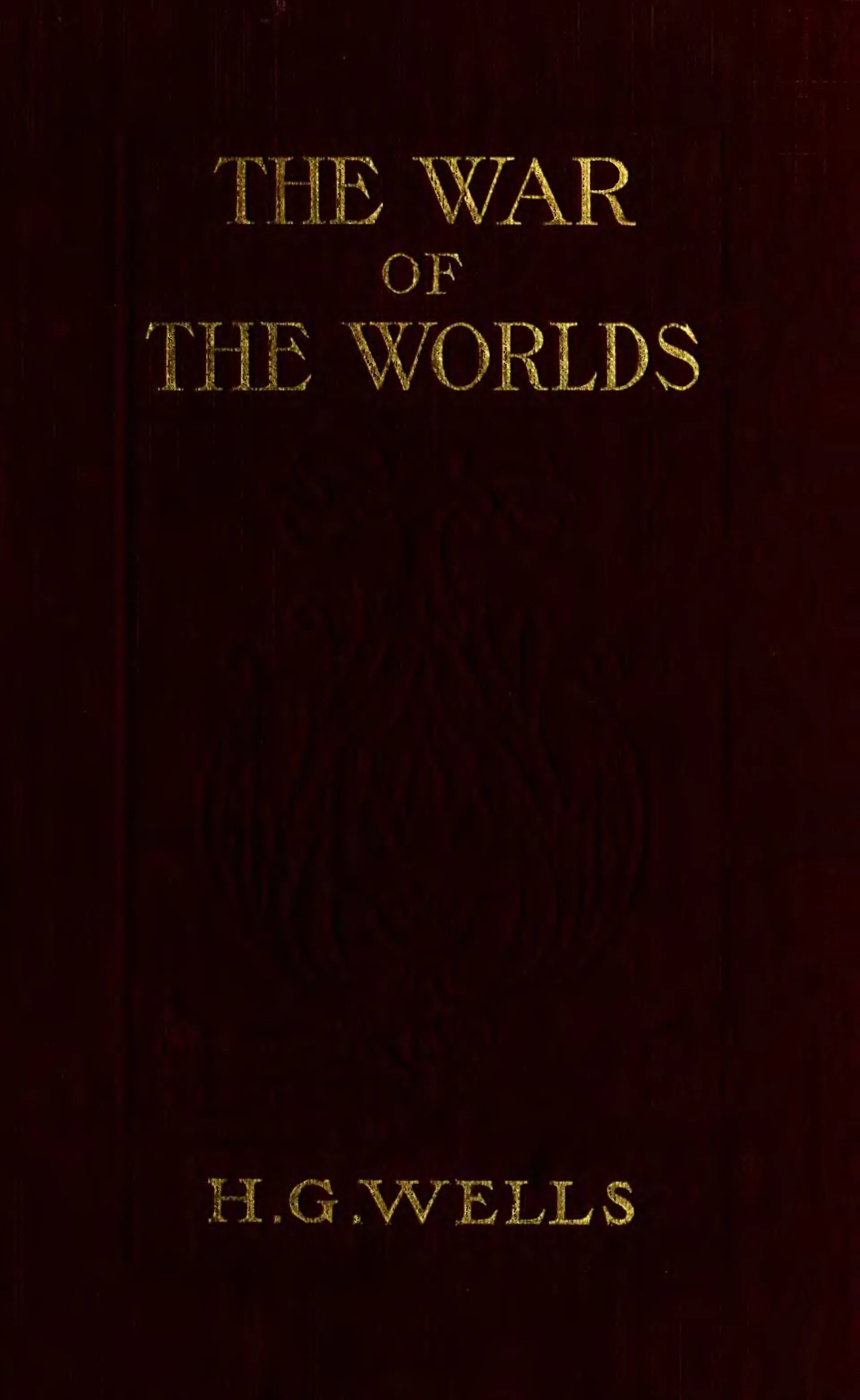
The War of the Worlds
The War of the Worlds (1898), by H. G. Wells, is an early science fiction novel which describes an invasion of England by aliens from Mar...
From the Earth to the Moon
From the Earth to the Moon is one of the first books discussing space traveling from a scientific perspective. Written by Jules Verne in...
eBay marketplace picks
Marketplace Samples
Live-tested eBay searches with available results related to this page.
Selected fromsci fi poster oneBay.co.uk.
Endnotes
1.
Source: sf-encyclopedia.com
Title: SF Encyclopedia SFE: Spaceships
Link:https://sf-encyclopedia.com/entry/spaceships
Source snippet
SF EncyclopediaSFE: SpaceshipsFebruary 17, 2025...
Published: February 17, 2025
2.
Source: Wikipedia
Title: Flying saucer
Link:https://en.wikipedia.org/wiki/Flying_saucer
3.
Source: Wikipedia
Title: History of science fiction
Link:https://en.wikipedia.org/wiki/History_of_science_fiction
4.
Source: encyclopedia.com
Link:https://www.encyclopedia.com/arts/educational-magazines/science-fiction-and-fantasy-literature
5.
Source: bis-space.com
Link:https://www.bis-space.com/from-amazing-stories-to-the-bis-100-years-of-scientifiction/
Source snippet
The British Interplanetary SocietyFrom Amazing Stories to the BIS: 100 Years of “Scientifiction” - The British Interplanetary Society...
6.
Source: epublications.marquette.edu
Link:https://epublications.marquette.edu/english_fac/640/
7.
Source: korshakcollection.com
Title: Korshak Collection Frank R. Paul | The Korshak Collection
Link:https://www.korshakcollection.com/frank-r-paul
8.
Source: sciencefocus.com
Title: Science Focus Nope: Could UFOs really exist and how would they fly?
Link:https://www.sciencefocus.com/news/nope-could-ufos-really-exist-and-how-would-they-fly
Source snippet
Science FocusNope: Could UFOs really exist and how would they fly? - BBC Science Focus MagazineAugust 13, 2022...
Published: August 13, 2022
9.
Source: ultimatepopculture.fandom.com
Title: Flying saucer
Link:https://ultimatepopculture.fandom.com/wiki/Flying_saucer
Additional References
10.
Source: skyatnightmagazine.com
Link:https://www.skyatnightmagazine.com/space-science/why-are-we-so-obssessed-with-ufos
Source snippet
A history of flying saucers and why they continue to fascinate us | BBC Sky at Night MagazineMay 11, 2026 — WHY ARE WE SO OBSESSED WITH U...
Published: May 11, 2026
11.
Source: skyatnightmagazine.com
Title: A history of flying saucers and UFOs | BBC Sky at Night Magazine
Link:https://www.skyatnightmagazine.com/space-science/flying-saucers-ufo-history
Source snippet
What's interesting is that's one of the things that changes. When you look particularly in, say, the first decade or decade and a ha...
12.
Source: wired.com
Title: how ufo [sightings]({{ ‘sightings/’ | relative_url }}) became an american obsession
Link:https://www.wired.com/story/how-ufo-sightings-became-an-american-obsession
Source snippet
The period following his sighting saw a surge in UFO sightings across the U.S. This surge, or "flap," is linked to societal fears of inva...
13.
Source: youtube.com
Title: Design Principles in Sci-Fi Spaceships
Link:https://www.youtube.com/watch?v=OHYIi-kaP6c
Source snippet
Early science fiction spacecraft history Jules Verne HG Wells spaceships The Earliest Spaceships seen in science fiction (1865-1950) Nutbug...
14.
Source: youtube.com
Link:https://www.youtube.com/watch?v=jZgdzHwCsGA
Source snippet
How They Made a Science-Based Space Film in 1950 | Destination Moon...
15.
Source: youtube.com
Link:https://www.youtube.com/watch?v=qusXS85RVAE
Source snippet
A Brief History of Space Travel In Science Fiction...
16.
Source: loc.gov
Link:https://www.loc.gov/collections/finding-our-place-in-the-cosmos-with-carl-sagan/articles-and-essays/life-on-other-worlds/ufos-and-aliens-among-us/
17.
Source: facebook.com
Link:https://www.facebook.com/groups/spacemansluck/posts/3066679126905454/
18.
Source: baen.com
Link:https://www.baen.com/warships
19.
Source: scifi.stackexchange.com
Title: what is the first instance of a mechanism for faster than light travel in scienc
Link:https://scifi.stackexchange.com/questions/93685/what-is-the-first-instance-of-a-mechanism-for-faster-than-light-travel-in-scienc